Skip to content

Product Strategy & Management – UX Design

AI Visualizer

project Brief

From an innovation day experiment to a group level initiative

Back in 2023, when Gen AI for image generations was still in its crib, we initiated an inovation day experiment to explore the potential of this new technology in architecture design use cases.

This idea was loved by stakeholders and early testers that within weeks we started working on the first iteration of the release feature to be named AI Visualizer. 

Now the AI Visualizer is a released feature integrated in three Nemetschek Group brands: Graphisoft, Vectoworks, and Allplan.

This project is a showcase of my growth experience from a product designer, to a product strategist while the AI visualizer is evolving from an idea to feature to a monetizable dedicated product.
Generative AI Experimentation

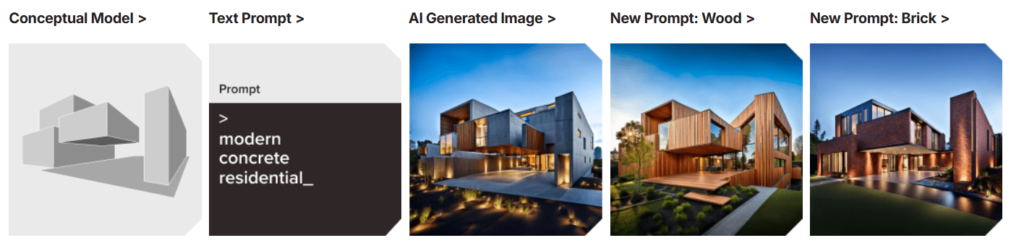
Text to Image

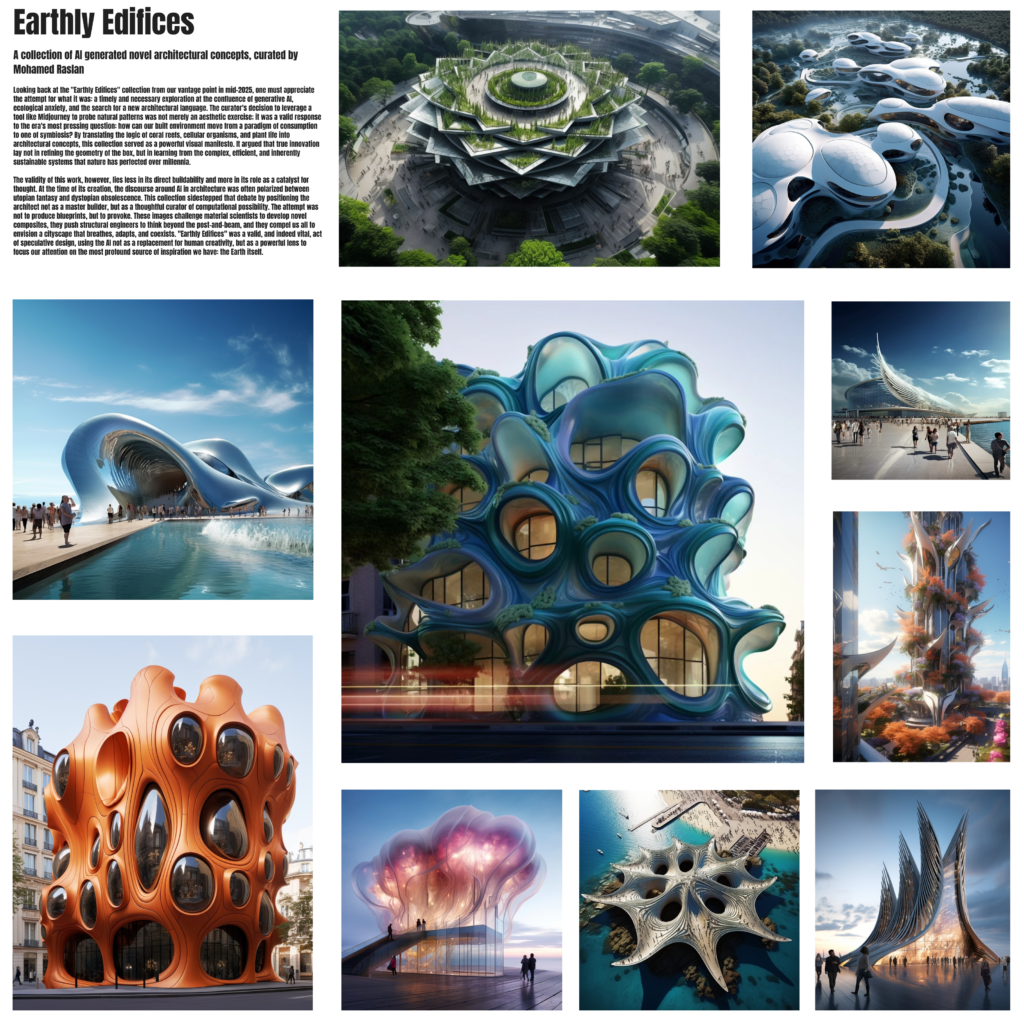
Using Midjourney to explore novel architectural concepts, I curated a collection of nature inspired concepts called Earthly Edifices that quickly gained more than ten thousands followers on Instagram

Image/3D model to Image

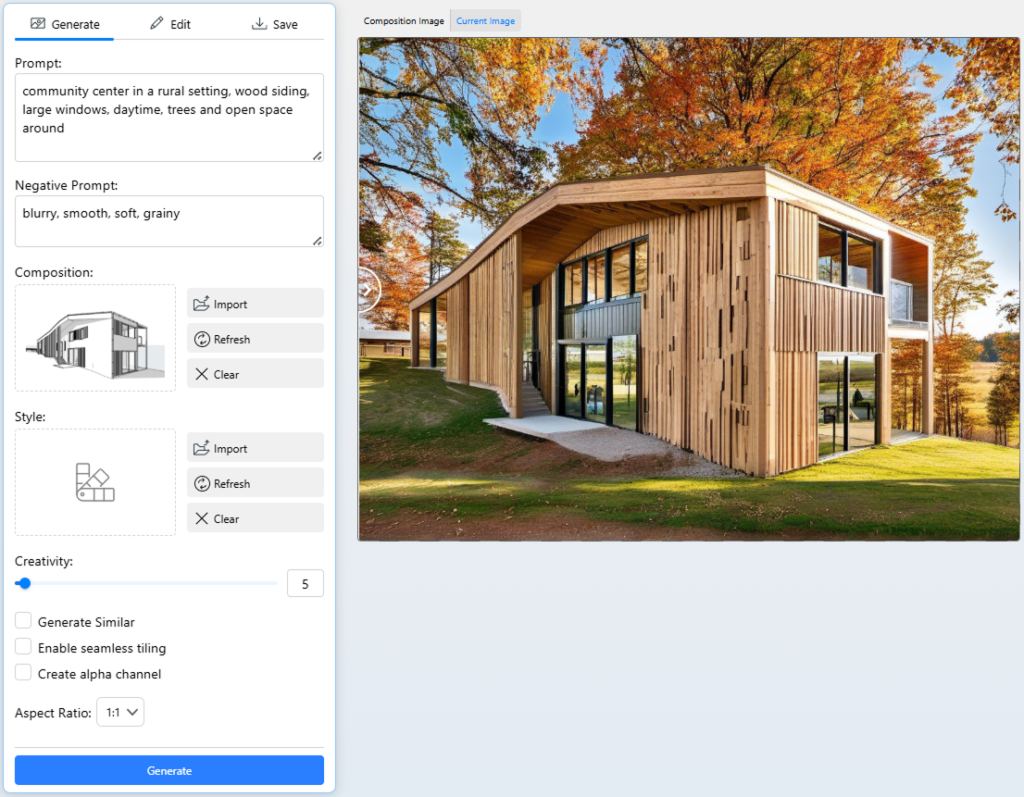
The more relevant use case for architects is to create a conceptual model and generate concepts based on it. Earlier models such as Stable Diffusion were struggling with consistency, still relevant for exploration

Choosen use case

Early design exploration

(As a product designer)

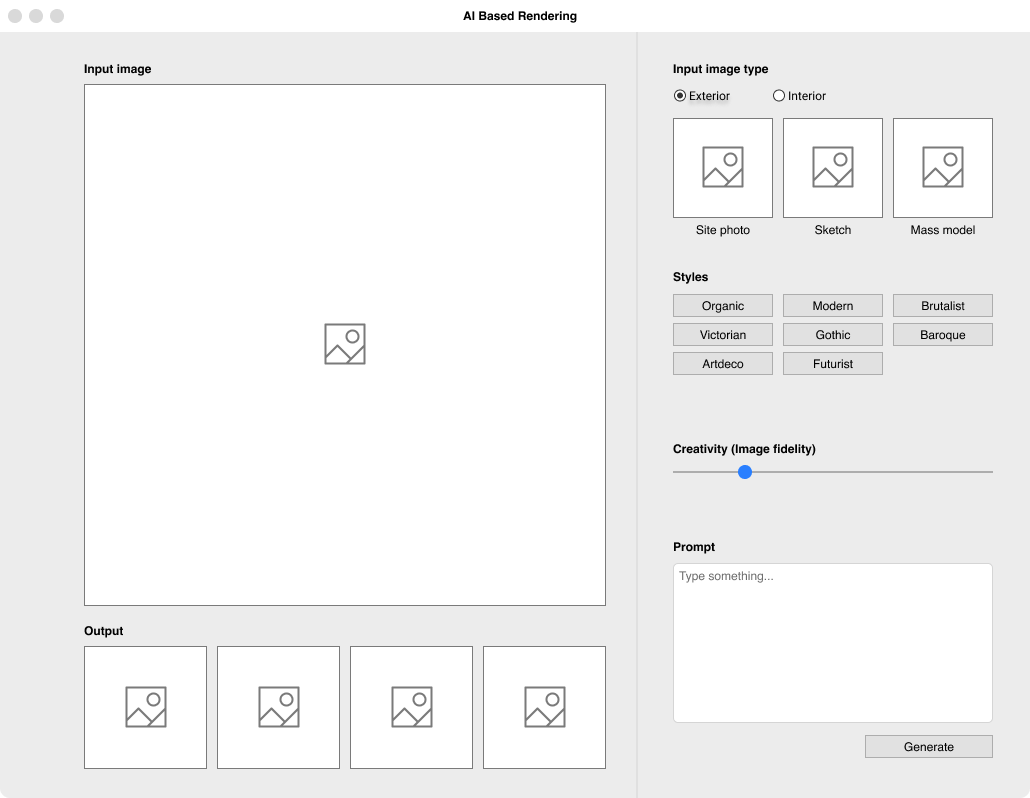
Early low fidelity wireframes during the Graphisoft innovation days as a proof of concept.

The initial idea was to minimize the user difficulties to use Stable Diffusion by offering preset styles. 

Following usability tests, showed that this was overcomplicating the flow, and limit the flexibility of free prompting

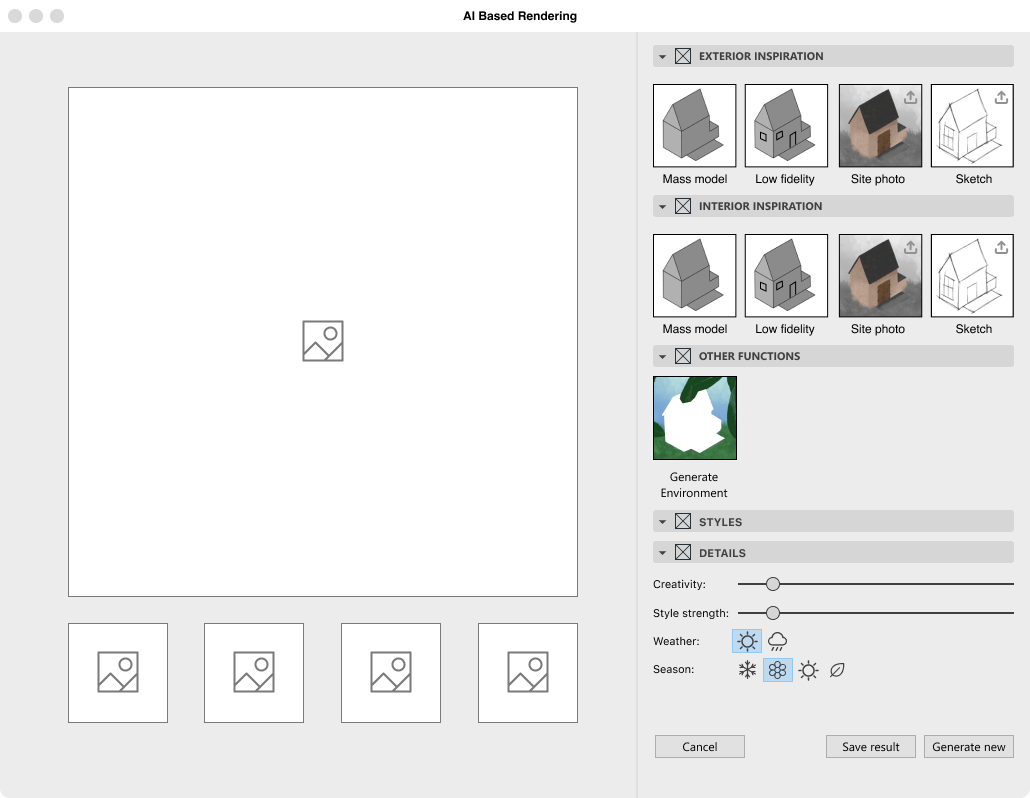
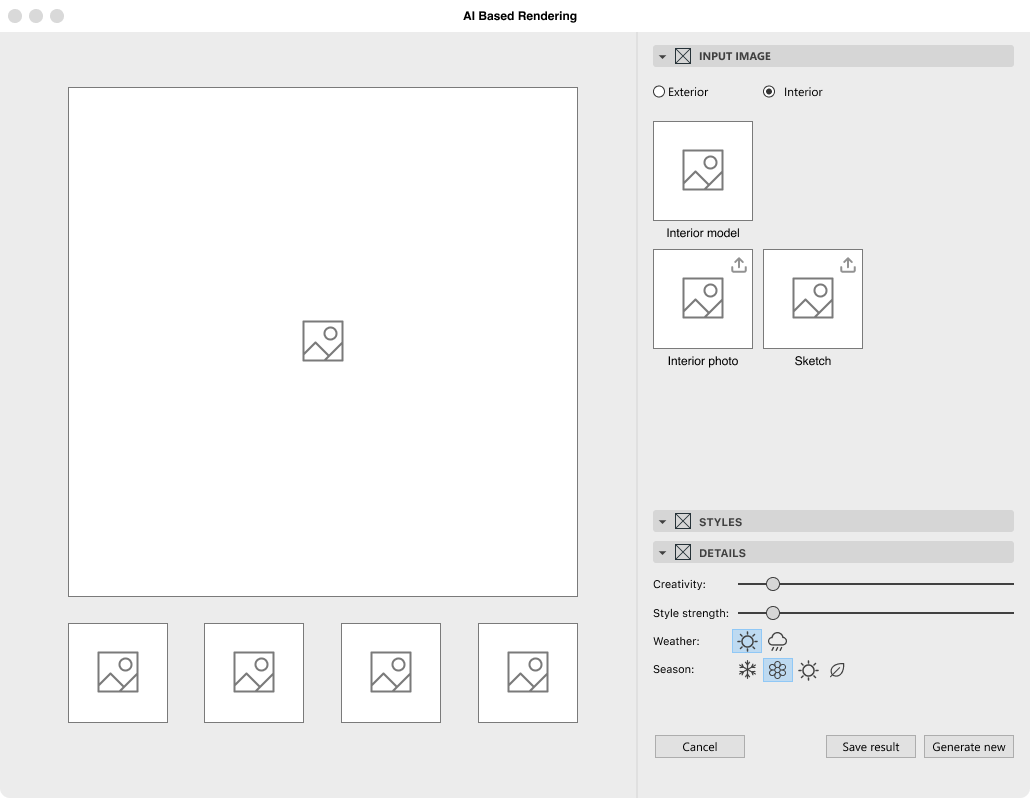
First released feature in Archicad 27

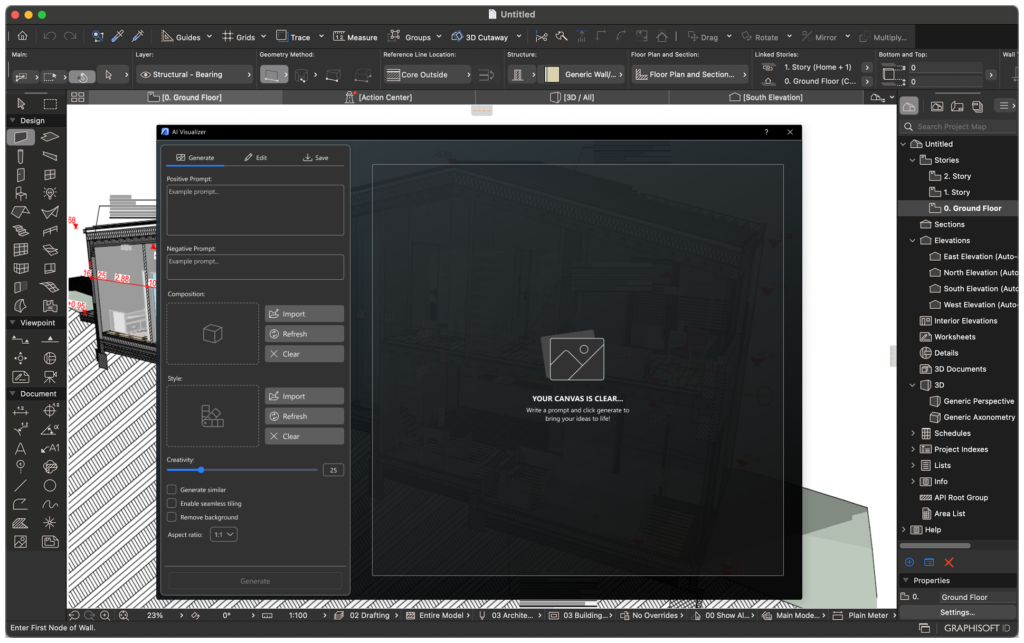
Latest released version in Archicad 29

(As a product manager)

In addition to the typical image/3D model to image use case. We adopted a more flexible approach by expanding the AI visualizer with four more new capabilities.

Planning the development into an agile incremental components to be delivered by three SCRUM squads working in parallel.

The new AI Visualizer integration in Archicad 29 was delivered in 3 sprints only, a much shorter period to deliver than the typical Archicad feature taking on average 5-6 sprints.

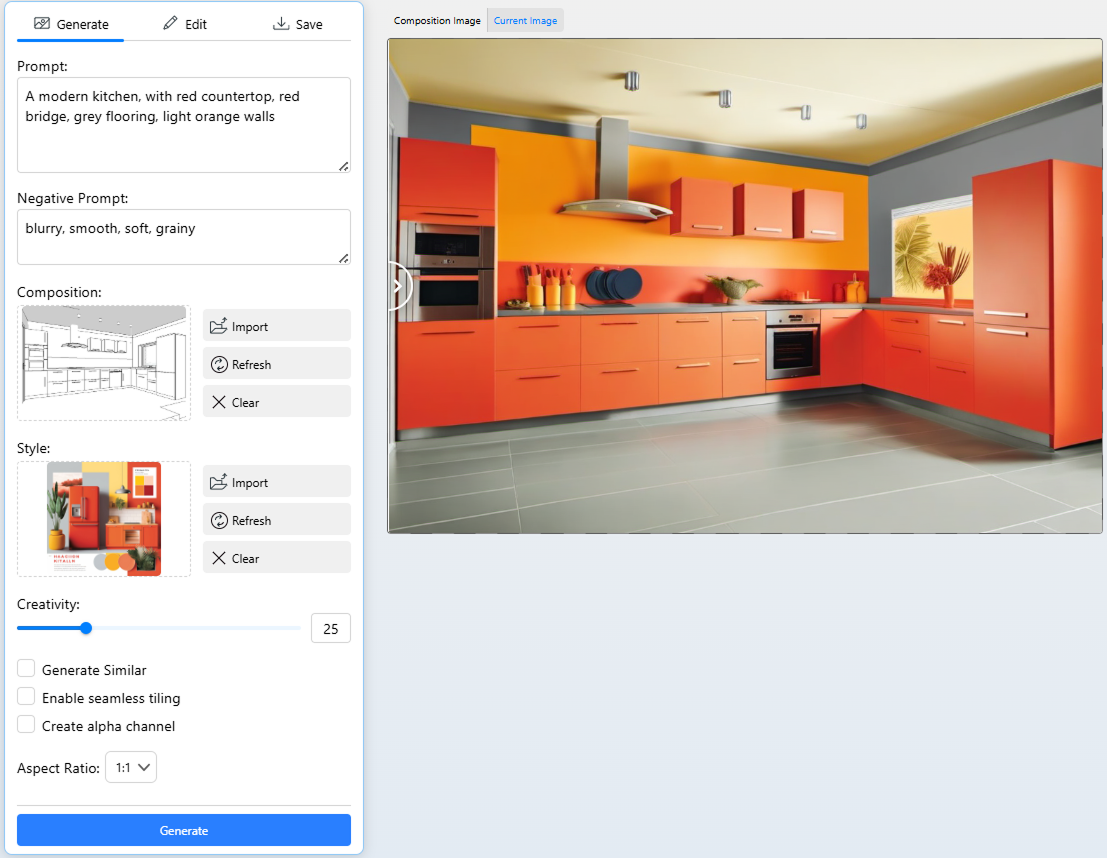
Style Referencing

Allowing designers to upload a mood board or a specific style of sketching or rendering which influence the AI generated image

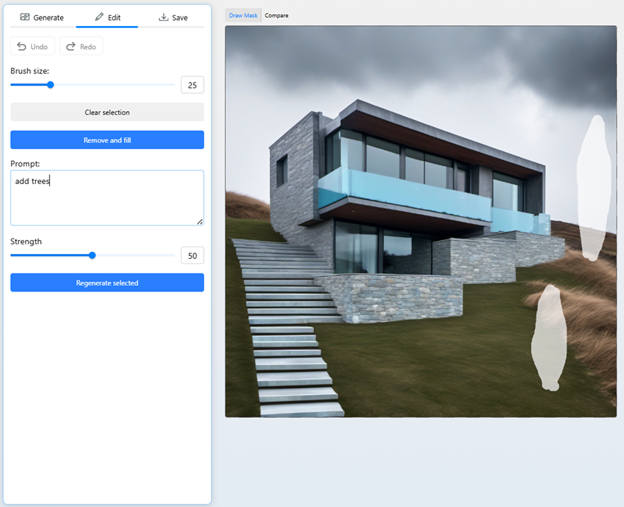
In place editing

Using masking or brushing techniques, designers can define where exactly they want to modify the generated image

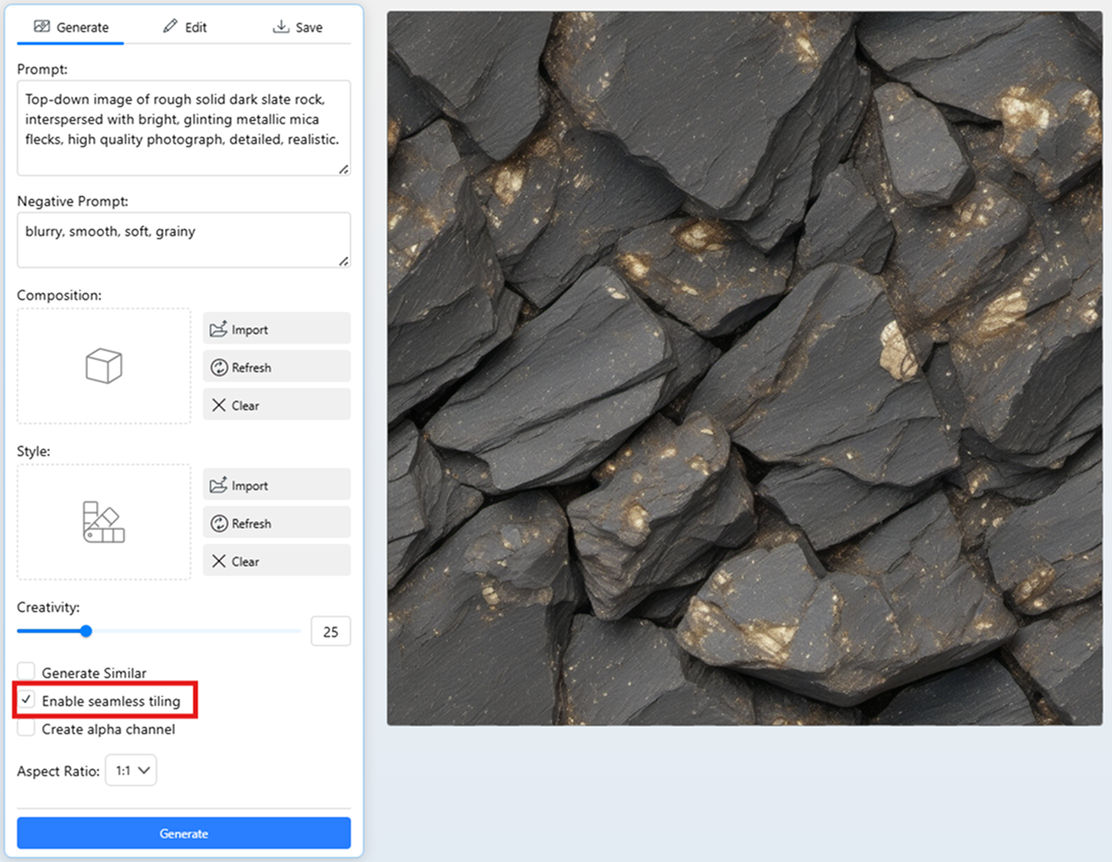
Seamless Textures

Allowing designers to generate texture maps with perfect tilling a very needed feature for better 3D model visualization

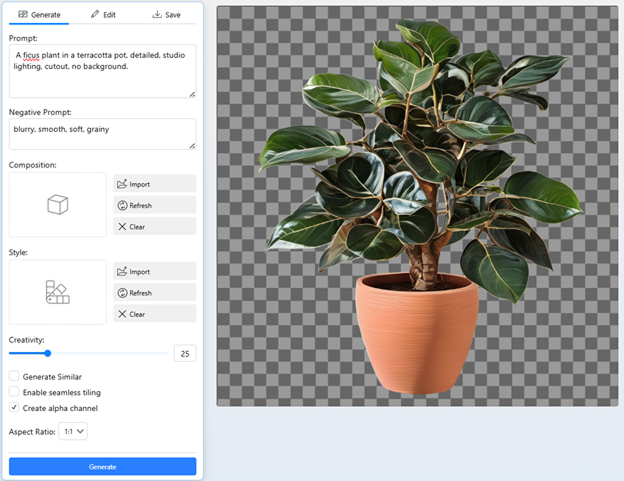
Objects without backgrounds

Allowing designers to generate objects to enrich their renders without the need to place actual 3D models

Dark Mode

Two weeks before the release we had to make a decision if we would cut the AI Visualizer Dark mode support for Mac OS users. 

My proposal was to build the infrastructure anyway that would enable us to add the dark mode anytime we are ready with it. And we managed to deploy it anyway before the release date due to the overestimation issue from some of the tech experts.

Vibecoding as a method of iterative prototyping

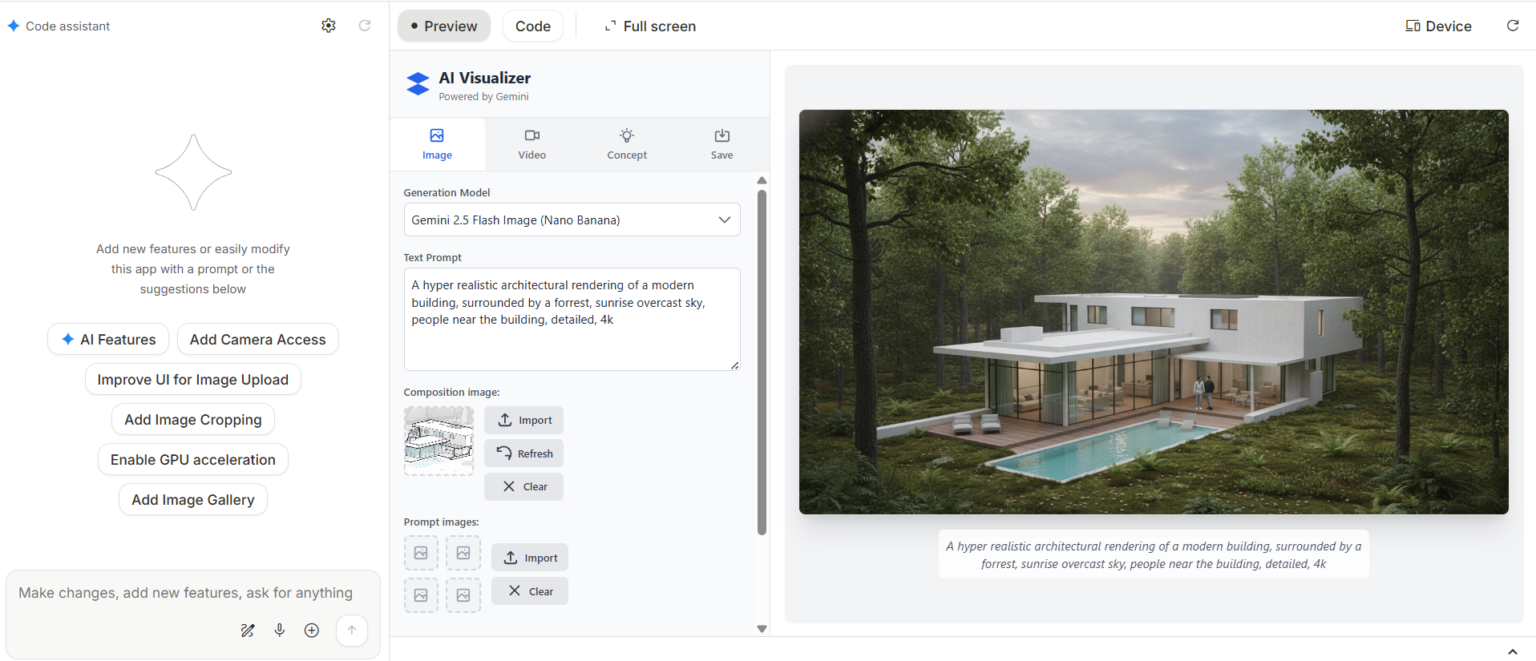
As a product manager with design experience, I could very quickly (within few hours) build a functional prototype using Google AI Studio Vibecoding new feature to test possible directions very early.

This maximized the potential of stakeholders discussions while seeing the interactive functional prototype. In addition, it enables much earlier validation and testing which streamlines the whole delivery process.

Other Projects

UX Research – User Journey Mapping 

Service redesign 

AI Assistant

AI Product Design and Strategy

Design seamless experiences

Let’s talk!